
A program curriculum built to improve health for all
Midwest LEADRS integrates immersive learning, structured methodological training, and ethical instruction to ensure Fellows can apply SDOH principles rigorously and responsibly.

The Midwest SDOH Intensive is the foundational launch of the program. Held at Irvington Event Center in Indianapolis, this Intensive brings together Institutional and Regional Fellows for immersive learning and collaboration.
The Intensive includes:
Topics include:
Regional Fellows receive travel and hospitality support.
Ensuring high-quality, reproducible science.

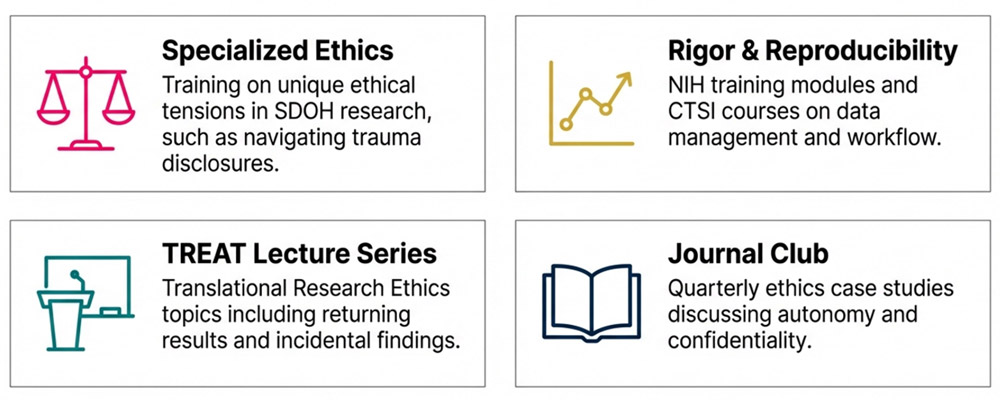
To ensure methodological rigor and reproducibility, Fellows complete required online coursework during the first three months.
Required Indiana CTSI modules:
National Institutes of Health modules:
These modules strengthen Fellows' capacity to design and conduct high-quality, transparent, and reproducible research.
All Fellows receive formal instruction in Responsible Conduct of Research, integrating both in-person and virtual sessions.
Topics include:
Instruction includes didactic sessions, case-based, learning, ethics discussions, and participation in the IU Translational Research Ethics (TREAT) lecture series.
Fellows receive at least eight hours of structured RCR training, exceeding NIH minimum requirements.
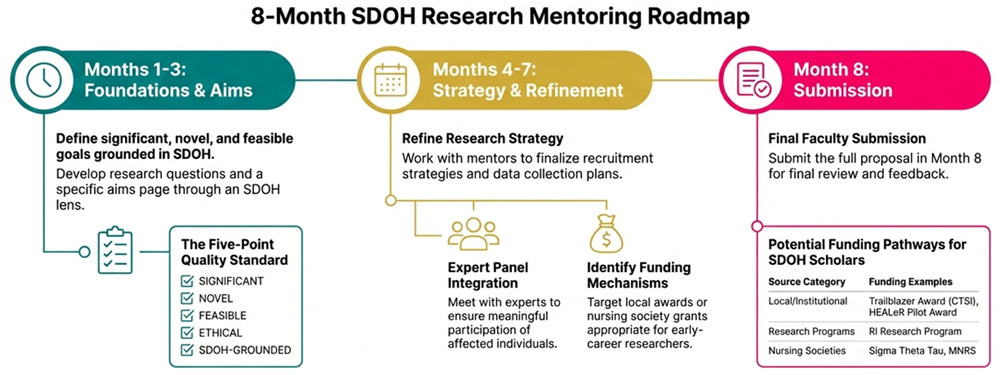
Mentoring in the Midwest LEADRS program is structured, sustained, and tailored to Fellows' career stage and institutional context. The goal is to ensure that new knowledge in social determinants of health translates into rigorous, feasible, and fundable research.
Institutional Fellows are paired with:
Regional Fellows:
Mentoring occurs through monthly meetings over approximately eight months, with increasing emphasis on proposal readiness.
During these meetings, mentors and fellows will focus on:
By the end of the program, Fellows leave with a clear, actionable research plan positioned for submission to NIH or other competitive funders.
A defining feature of Midwest LEADRS is its emphasis on real-world application through service-learning projects developed in partnership with community organizations addressing critical social and structural drivers of health.
Service-learning projects may include:
Projects are conducted using a case-based, strengths-focused approach and continue throughout the program. Fellows conclude the experience by delivering a formal research product or briefing to their community partner.
Midwest LEADRS prepares fellows to disseminate SDOH research in ways that are accessible, rigorous, and impactful across academic, clinical, and community settings.
All Fellows are required to:
Dissemination training emphasizes tailoring messages to diverse audiences and positioning Fellows as future leaders in SDOH research and policy-relevant scholarship.