The nursing field offers a number of pathways for those who choose to join. Some answer the calling as educators, some as researchers, and others remain at the bedside caring for patients. Still others step into the policy arena, advocating for legislation to help patients and improve the healthcare system.
Three IU School of Nursing graduate students decided to expand their passion for policy and advocacy from the state to the federal level. Rachael Harless, Laura Koke, and Alta Skelton have been selected to attend the American Association of Colleges of Nursing Student Policy Summit in Washington, D.C.
While all three students share a passion for policy and advocacy, each brings deeply personal concerns to Capitol Hill—eager to learn, to engage with lawmakers, and help shape policies that will better serve patients in their communities.
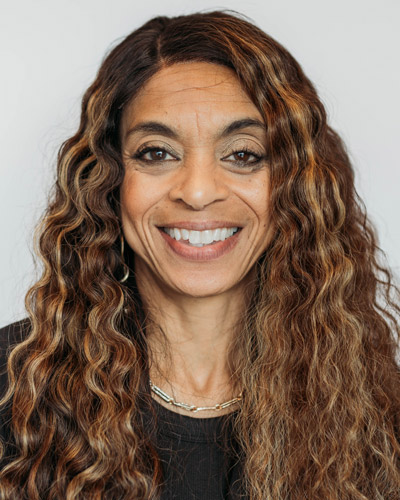
DNP student Alta Skelton, ASN’92, MSN’02, began her career as an ICU nurse at St. Vincent Hospital in Indianapolis and eventually became a preceptor. In the spring of 2024, she took a class with Sharron Crowder, PhD, RN, clinical professor and assistant dean for Health Policy Initiatives, where she became interested in policy and advocacy.
Now pursuing her third degree at IU, Skelton also manages her own practice, Fully Armored Family Health and Fitness, and serves as an adjunct faculty member at IU.
Skelton’s DNP project focuses on maternal health outcomes and preventing preeclampsia, as well as the infant and maternal mortality rate, which is highest for Black women and their babies.
“That shouldn’t be,” said Skelton. “We have modern medicine, so why is that? So, my passion also is to delve into the research and be the voice for those moms.”
As a nurse practitioner and member of O’Connor House—a housing-based program for single, pregnant women—she sees the effects of maternal health issues firsthand. While legislation to combat these issues is close to her heart, she also hopes to discuss health insurance legislation during the policy summit. Currently, nurse practitioners only receive 85% of what physicians do in insurance reimbursement, even when they provide the same primary care, according to Skelton.
“There are fewer physicians going into primary care, and because of that, nurse practitioners are filling in that gap, and we’re doing a really good job of it,” she said. “We need more nurse practitioners, and we need them to be paid fairly from our insurance companies.”
Skelton also looks forward to learning tools from legislators that will help her be most effective while advocating for legislation at home.
“I look forward to learning from them and then bringing that back to fellow nurses and nurse practitioners and saying, ‘Yes, let’s get involved. Here’s what I’ve learned and now you can pass it on to others and spark their interest.’”
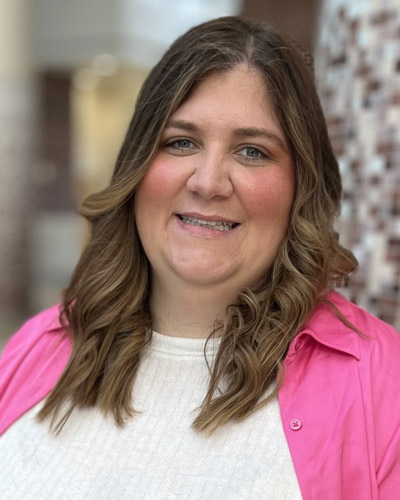
MSN student Rachael Harless saw firsthand how crucial dedicated healthcare professionals are when her younger brother developed a tumor in his spinal cord at two years old. Initially, she set out to become a physician, but she transitioned to nursing to have a more personal relationship with patients.
“In a moment where my family was most vulnerable, we had the medical teams to turn to, and the nurses were always the ones who were most supportive,” she said.
Harless now works at Riley Hospital covering the hematology/oncology, stem cell transplant, neurology, and solid organ transplant units, and became interested in policy and advocacy as a clinical nurse specialist intern. Indiana Nurses Day at the Statehouse gave her the opportunity to become involved with legislation, and she set out to further her experience by attending the policy summit in D.C.
During the Statehouse event, Harless realized there was a large knowledge gap about what the CNS role entails, which she aims to bridge at the summit.
“A lot of people misunderstand the CNS role,” she explained. “I felt really passionate about getting people to understand what the CNS was and figuring out my role in this position at the same time.”
One of the nursing-related pieces of state legislation that was considered last year would have altered the scope of practice for Advanced Practice Registered Nurses and their agreements with the physicians they work alongside.
Harless has also seen firsthand how budget cuts to both Medicaid and oncology research have negatively affected patients.
Healthcare workers have also been facing increasing violence in the workplace, Harless said. She hopes to share stories with legislators and discuss possible resources and protections that can be provided for healthcare workers.
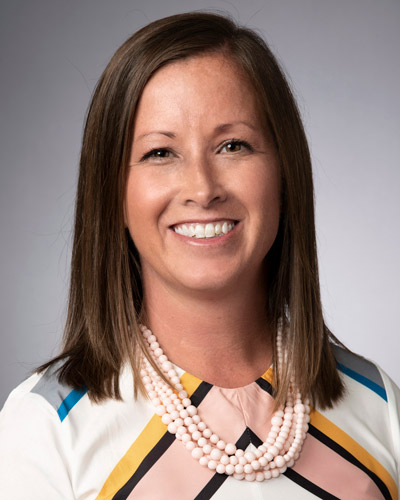
DNP student Laura Koke, MSN’24, RN, knew she wanted to be a nurse at five years old. Koke is a quadruplet and had more health issues than her siblings when she was young. After such extensive exposure to nurses at an early age, she knew she wanted to care for patients the same way nurses cared for her.
Koke also found her passion for advocacy through Dr. Crowder’s Health Policy class. She then gained additional experience as a member of the Eagles, a School of Nursing policy and advocacy mentorship program, and as a member of the Indiana State Nurses Association.
Koke has a list of issues she wants to discuss with legislators during the summit, including healthcare access, the increasing unaffordability of healthcare, as well as rising workplace violence toward nurses.
“It’s impacting healthcare and the environments we work in, so I hope to be able to share lived experiences with our federal lawmakers,” she said.
Inspired by her experience, Koke has also put together nursing education materials about how fellow nurses can become involved with legislation.
“I always thought policy wasn’t for me,” she said. “But I don’t want any nurse to think that way because policy shapes the care that we’re able to provide to our patients in our communities, and it’s vital that we’re at the table.”
In addition to sharing her experiences with lawmakers, she wants to return from the summit with additional information to share with fellow nurses to continue that work.
Harless is one student Koke inspired to become involved. Koke says she encouraged Harless, a colleague and friend, to pursue her passion for policy and apply for the summit.
“I’m excited to experience it through her eyes, too,” Koke said.
Taking a Seat at the Table
While each nurse has their own area of policy they want to focus on in D.C., each shares the same sentiment: nurses need to share their voices and find a seat at the policy table.
“Our whole job as a nurse is advocating,” Harless said. “You do that daily as a nurse. You’re the one sitting there and advocating for your patient. Taking that one step further and being involved in policy and legislation is still advocating for your patients.”