

Indiana University School of Nursing PhD student Kellie Girardot has spent nearly 20 years caring for trauma patients and witnessing the remarkable advances that help them survive life-threatening injuries. Yet throughout her career at Parkview Health, she observed a challenge that often remained long after patients left the hospital: the psychological toll of trauma.
Many trauma survivors experience post-traumatic stress disorder, depression, anxiety, poor sleep, and other mental health challenges following discharge. Too often, however, those issues are identified only after symptoms emerge, and patients are already struggling to access care.
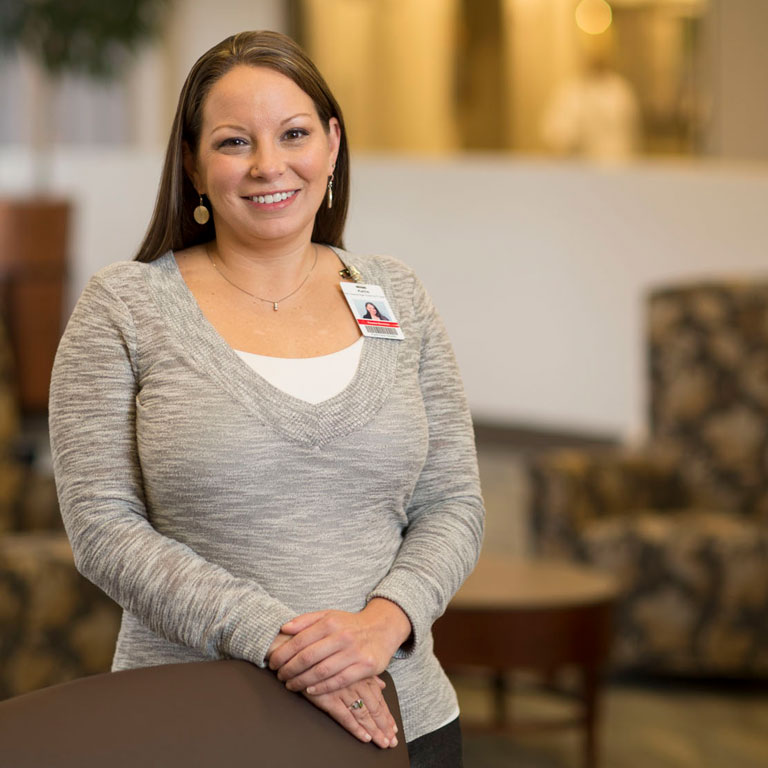
Girardot's research seeks to change that approach.
Drawing on her nearly two decades of clinical experience—many as a trauma clinical nurse specialist—Girardot focuses on developing ways to identify trauma patients who may be at risk for future mental health complications before they leave the hospital. Rather than waiting for problems to develop and then responding, Girardot aims to help trauma centers take a more proactive approach to supporting recovery.
Her pilot study examined the mental healthcare trauma patients received in the six months following discharge and evaluated how existing screening practices identified those at risk. The findings suggested that some patients who initially screened as low risk later developed significant mental health concerns after returning home.
"All over the country, trauma patients are suffering after discharge," Girardot said. "If we can identify these patients who might screen negative but have the characteristics to be most likely to develop PTSD, we can get them set up with care now."
Building on those findings, her dissertation research will investigate how screening methods can better identify patients who are likely to experience psychological challenges after discharge and connect them with resources earlier in their recovery. Through patient surveys and follow-up assessments, she hopes to identify opportunities to strengthen screening practices and improve trauma-informed care.
"I'm hoping that in the hospital, we can improve our screening and our trauma-informed care overall, how the nurses are interacting with these patients and what they're giving them education-wise, information-wise to help deal with this," she said.
The significance of Girardot's work extends beyond a single hospital or community. As trauma centers across the country increasingly recognize that recovery involves both physical and psychological healing, her research contributes to a growing body of nursing science aimed at improving long-term outcomes for trauma survivors.
Looking ahead, Girardot envisions expanding Parkview's follow-up care model to address both patients' physical and mental health needs. In addition to post-surgical follow-up care, patients could access services such as social work and case management. Peer mentors who have experienced traumatic injuries themselves could also provide guidance to current patients as they navigate their recovery.
"Instead of just that brief post-surgical follow-up clinic, I want to expand it to more of a trauma survivorship clinic," she said. "Then patients can go there for a post-surgical follow-up and also see a social worker, case manager, or psychiatrist, or whoever that patient needs."