

Andrea Tanner, PhD, RN, spent 18 years as a professional school nurse supporting student health and learning by providing care, promoting wellness, and coordinating health services in Southern Indiana. Today, as an assistant professor and nurse scientist at the Indiana University School of Nursing in Bloomington, she is leveraging nearly two decades of school nursing experience to advance the health and well-being of students through research, education, and advocacy.

"I knew I wanted to be a school nurse as soon as I had a pediatric clinical experience with a school nurse during my BSN program," Tanner recalled.
In her years as a school nurse, she witnessed both the profound impact school nurses can have on students and the obstacles they face every day.
"I became aware of the tremendous impact school nurses could have, and the stunted impact they often experienced because of a lack of evidence-based, school nurse-led interventions, role clarity, and support from school decision makers,” Tanner said. “I decided it was time for me to do what I could to change that.”
Determined to help strengthen the profession she loved, Tanner enrolled in the PhD program at the IU School of Nursing in 2018, earning her degree in 2021. The experience, and the postdoctoral training that followed, helped shape her path as a researcher and educator.
“Through my PhD and postdoctoral training at the IU School of Nursing, I learned from world-renowned researchers and educators,” she said. “They equipped me with the knowledge and skills to conduct research, educate the next generation of nurses, advocate for our profession, and shape health policy.”
From Responding to Crises to Preventing Them
As a school nurse, Tanner cared for adolescents with functional neurological disorder (FND), a complex mental health concern with physical symptoms, but found little evidence-based guidance available. She then focused her research on understanding the challenges that adolescents experiencing FND—specifically psychogenic non-epileptic seizures—face in school.
Tanner gave voice to students who experienced bullying from peers, harassment from school personnel, and overall uninformed school management. Tanner also unearthed the positive role school nurses play in supporting self-management, coordinating care, and educating school communities on the complex condition.
Her research provides foundational information that helps school nurses and healthcare team members better meet the needs of students with FND. Local school districts and state, national, and international organizations have used Tanner’s research and expertise to guide their FND response procedures at school and their patient/family education. With an international team of pediatric FND specialists, Tanner’s research and real-world experience shaped the development of a school FND response plan now used around the world.
"This early work motivated me to look upstream," she said. "Was there a way school nurses could identify early warning signs of mental health concerns, such as frequent visits for unexplained headaches and stomach aches, before a debilitating condition like functional neurological disorder developed?"
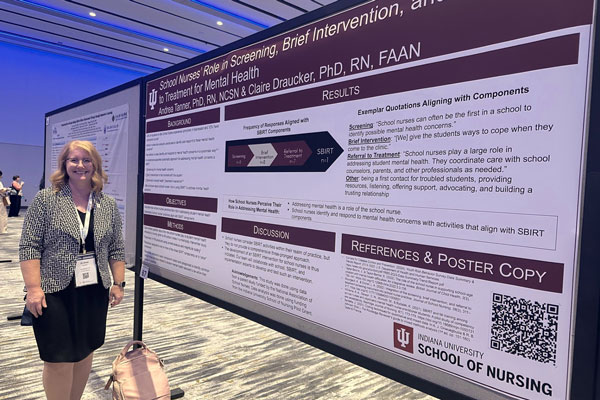
That question sparked Tanner to develop a school nurse-led intervention based upon the SBIRT (Screening, Brief Intervention, and Referral to Treatment) approach, which provides school nurses with a method to quickly identify and respond to a student’s mental health concern. Over the past two years, Tanner and her research team have surveyed 420 school nurses, developed and tested SBIRT training for school nurses, gathered feedback through focus groups with nurses and parents, and are now seeking funding to expand the work and measure its impact.
“I believe this work is important “because more than 50 million children attend K-12 school each year,” she said. “Every one of those children deserves a school nurse equipped with skills and knowledge based on evidence to meet their physical and mental health needs.”
Standing on the Shoulders of Giants
Long before she became a nationally recognized nurse scientist, others saw the promise in Tanner's curiosity, leadership, and passion for improving patient care.
In 2015, she was named one of just 10 nurses nationwide to receive the Robert Wood Johnson Foundation/AARP Breakthrough Leaders in Nursing award.
"By standing on the shoulders of nursing giants before me," she said, that recognition became the catalyst for future opportunities, including funding as an RWJF Future of Nursing Scholar during her PhD studies and partnerships with leaders in school nursing research, including those at the National Association of School Nurses.
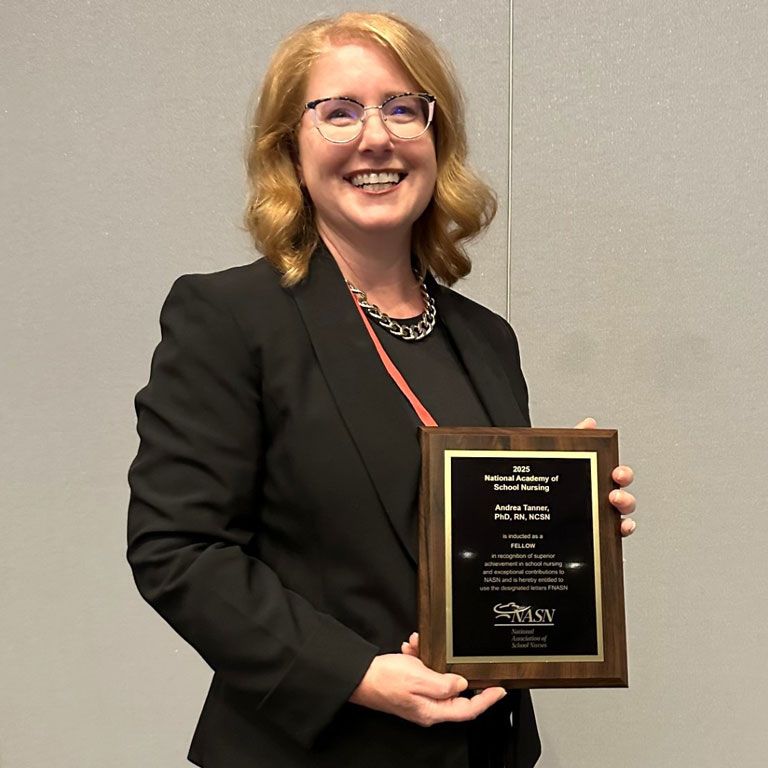
Since then, Tanner's work has continued to garner national recognition, including her induction as a Fellow of the National Academy of School Nursing.
"I am overwhelmed with gratitude for those who saw something in me that I didn’t see yet,” she said. “None of this would have been possible without the investment of many mentors, nominators, collaborators, and cheerleaders in my life. I am excited to be all those things for emerging nurse scientists."
Worthy of the IU Name
As an assistant professor, Tanner strives to share an enthusiasm for nursing science and evidence-based practice, along with real-world examples of how research can improve lives. She also hopes to introduce students to the school nursing specialty that first captured her heart more than two decades ago.
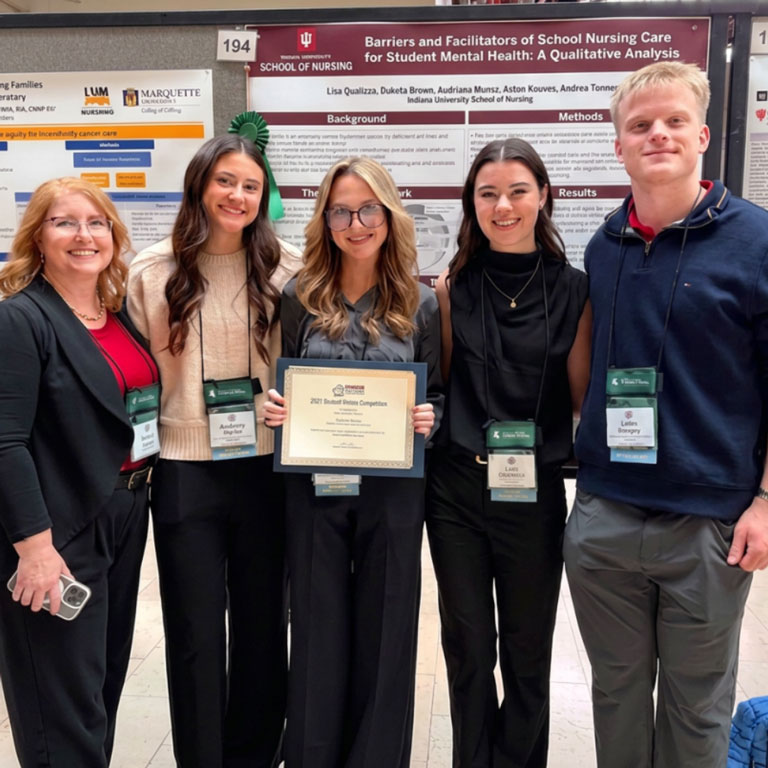
Just as important, Tanner aims to create a supportive environment for students and colleagues alike. She champions the mental health and well-being of not only K-12 students, but also the school nurses and future nurses who serve them, offering a safe space to turn when challenges feel overwhelming.
"Because of what I have gained from IU and the IU School of Nursing, I am excited to infuse my research, teaching, and service with a commitment to excellence worthy of the IU name."