

One day at Riley Hospital for Children, Jo Curtiss struck up a conversation with a fellow employee whose name sounded strangely familiar. Then it clicked: decades earlier, Curtiss had cared for her as a premature baby in the neonatal intensive care unit.
It's one of the countless reminders of the lasting impact Curtiss made during her 50-year career as a neonatal intensive care unit nurse at Riley. The Indiana University School of Nursing alum retired in June after spending five decades caring for some of Indiana's smallest and most vulnerable patients while mentoring future generations of nurses.
From new nurse to trusted mentor
After completing her associate degree in nursing at IU Indianapolis in 1976, Curtiss knew that she wanted to work in pediatrics. She applied for an open NICU position at Riley across the street and was offered the job.
As with any new job, Curtiss said there was a learning curve.
“I remember being very scared the first day and thinking, ‘Am I supposed to take care of this tiny baby?!’” she said. “But I'm still amazed at the size of the babies and that they’re going to become big people and that their whole future’s ahead of them.”
Among her colleagues were IU nursing students she mentored during their capstone courses, one of her favorite parts of her job. Students in their last semester of the nursing program joined her for shifts in the NICU, where they learned the ropes and discovered whether the specialty was a path they wanted for themselves.
After 50 years, Curtiss knows how difficult, but rewarding, the unit can be. Her advice to new NICU nurses is to apply to the unit early, be patient with themselves, take things one day at a time, and ask questions.
“I don’t want them to be afraid to ask anybody for help, because nurses are always there to help everybody and each other.”
Curtiss witnessed a lot of changes in her long career. She saw the unit expand from having as many as 10 babies in a room to providing individual private rooms. When the nurses no longer worked in the same room, side by side, they had to adapt and make a more concerted effort to reach out and ask each other for help.
“You go through those moments together, whether it’s at work or outside of work, and we got to know each other very well working the way we did in the NICU,” she recalled.
She also saw the NICU expand to two units, the Maternity Tower and the Simon Family Tower, where Curitss worked with higher acuity babies.
Next chapter of caring
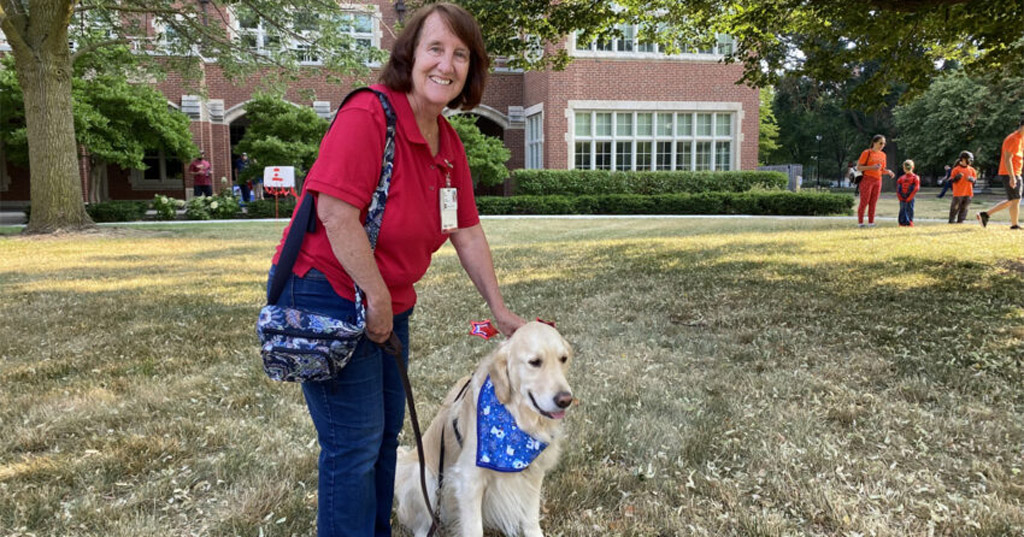
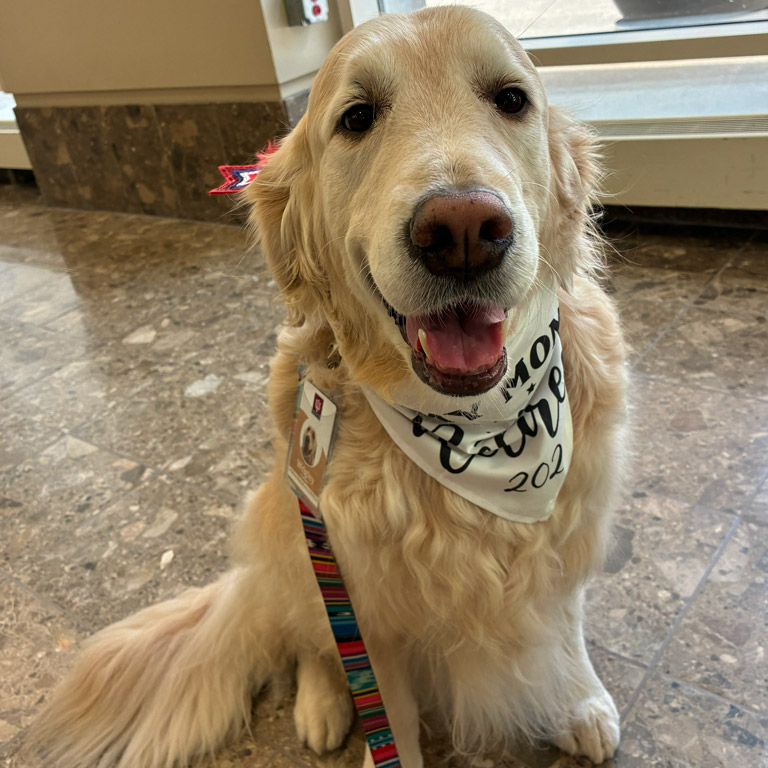
Although Curtiss is retiring from the NICU, she isn’t stepping away from caring for patients. She plans to continue connecting with patients through Riley’s pet therapy program with her dog, Wrigley. Curtiss and Wrigley have been volunteering for the past three and a half years at IU hospitals and with hospice patients, bringing comfort to children and adults during some of their most difficult moments.
Curtiss recalled the connection she was able to make with a patient who regularly visited with her and Wrigley at Riley.
“We had one girl last fall who was waiting for a heart transplant, and she would come down and see the dogs every Monday at Methodist,” she said. “One morning last November, she came down and said, ‘I have a surprise for you,’ and I said, ‘What is it?’ and she goes, ‘I’m getting my heart transplant this evening.’”
“I love the fact that you can help these families and each other,” Curtiss said.