Diabetes is a leading cause of chronic kidney disease, a serious condition that affects more than 10% of the global population. Sometimes, a simple conversation with a primary care provider can make a meaningful difference in a patient's health journey, and for people with diabetes, regular communication and education can help bridge gaps in understanding and encourage adherence to important preventive care measures.
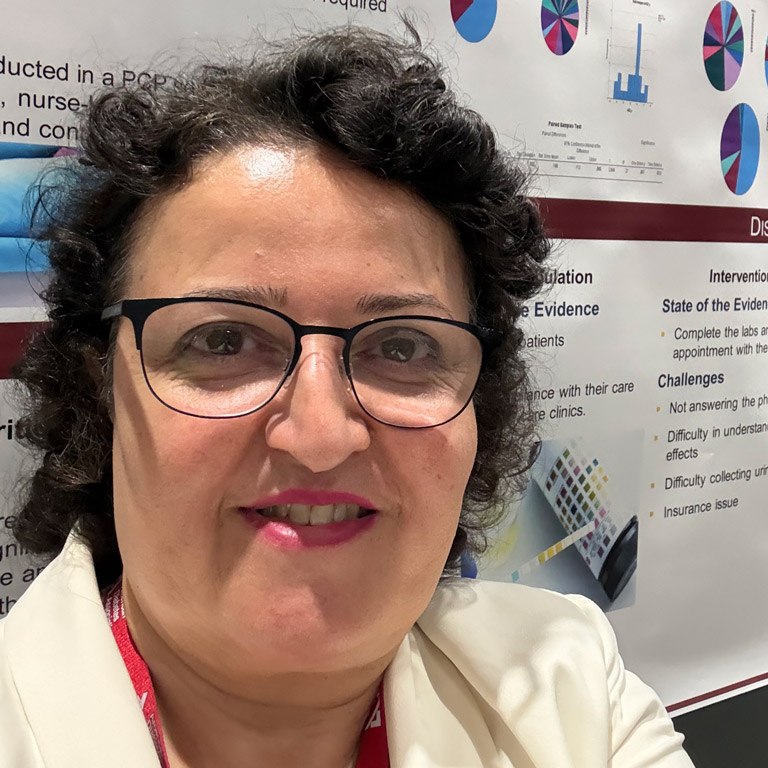
Recognizing the vital role nurses can play in patient engagement, 2026 DNP program graduate Sue Naderi investigated nurse-led education and follow-up to improve adherence and prevent chronic kidney disease by using one-on-one phone conversations.
Methods
The project examined two methods to improve patients' adherence to primary care providers: (1) providing education via a 15-20-minute phone call that includes pre- and post-questionnaires, and (2) ordering labs before appointments, with notifications sent to the front desk to schedule with the PCP. These strategies were compared with simply sending a message via a secure computer system or phone. Participants were patients with an HbA1c of 8% or higher who had missed follow-up visits or lab tests, including HbA1c, urine albumin-to-creatinine ratio (UALCR), and basic metabolic panel (BMP), within the past three to six months. Engagement was assessed to confirm that labs were completed and appointments were scheduled.
Results
The project's goal was to increase adherence among patients with diabetes to their primary care providers by 25% and to reduce chronic kidney disease. Data analysis showed that these targets were exceeded, with more than 53% of patients completing labs and 39.1% completing both labs and a PCP visit for diabetes management after education sessions. The results demonstrated a significant increase in participants' knowledge after nurse-led education, as confirmed by a paired t-test (p=0.001) comparing pre- and post-education and an Analysis of Variance (ANOVA) test (p=0.03) across groups. Both statistical tests indicate that phone calls and direct conversations with patients are highly effective for diabetes education and enhance compliance with care among this population.
Conclusion
This project demonstrated that nurse-led education for patients with chronic conditions, such as diabetes, can improve patient outcomes and prevent advanced diseases like chronic kidney disease, ultimately reducing healthcare costs and improving organizational productivity and performance benchmarking.
We spoke with Naderi to learn more about why she chose the DNP program and what inspired her project.
What inspired you to pursue a DNP?
My motivation for pursuing a DNP stemmed from my passion for linking scientific research with direct patient care. With more than 14 years of nursing experience across diverse settings, I have always been driven by my mother's encouragement to expand my knowledge and assist others more effectively. I continually seek further education and improved ways to apply my expertise at a higher level, aiming to enhance patients' quality of life, particularly for those with chronic illnesses.
How did you become interested in this topic?
I have been working in a nephrology clinic as an FNP for the past nine years and have seen many patients with diabetes-related chronic kidney disease. This experience has motivated me to focus on preventing advanced chronic kidney disease in primary care clinics before it is too late.
Who were your faculty or site mentors and what advice did they offer that you'll most remember?
My faculty member was Debra Sipes-Fears, DNP, RN, and my clinical mentor was Jeniffer Simmermaker, executive director of Ambulatory Quality and Safety at IU Health. They consistently provided guidance to improve my project and helped me understand how to implement it effectively in real-world settings. They were always supportive and encouraged me to explore new approaches when working with the population involved in my project.
What are your hopes for your future impact on the nursing profession?
I plan to continue my project and focus on the secondary goal of improving blood sugar levels and chronic kidney disease outcomes. I look forward to engaging in more clinical research aimed at helping our population and society, ultimately enhancing their quality of life and health.