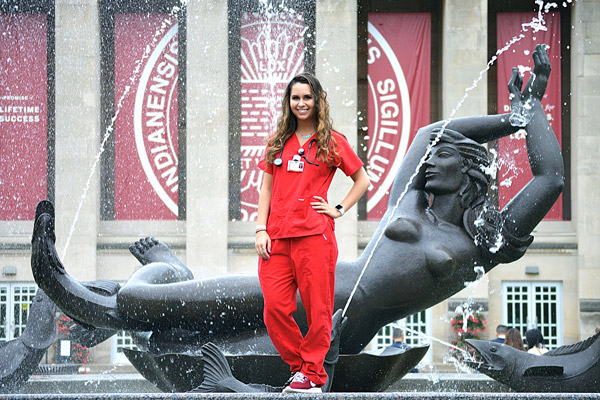
When a teammate badly cut her leg during a high school softball game, Mary Jancovich didn’t hesitate. She acted, grabbing a first aid kit and helping to bandage the leg. Afterward, a coach remarked, “You might be a nurse like your mom and grandma one day.”
For Mary, now an emergency room nurse and IU School of Nursing alumna, that moment “always stuck with me. It made me realize how comfortable I am stepping in during stressful situations and how much I truly enjoy helping others when they need it most.”
For her mother, Cheryl, and grandmother, Sylvia—both IU Nursing graduates themselves—it felt like family history unfolding once again. Across five decades, three women in the same family have chosen the same profession, the same university, and the same commitment to caring for others.
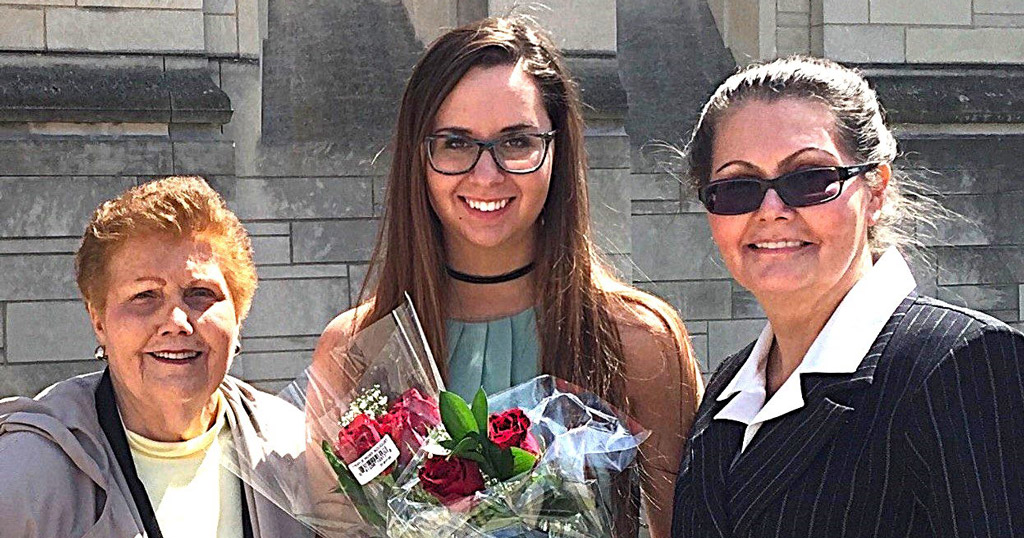
All in the Family
Long before nursing became Mary’s career, it was already part of her daily life.
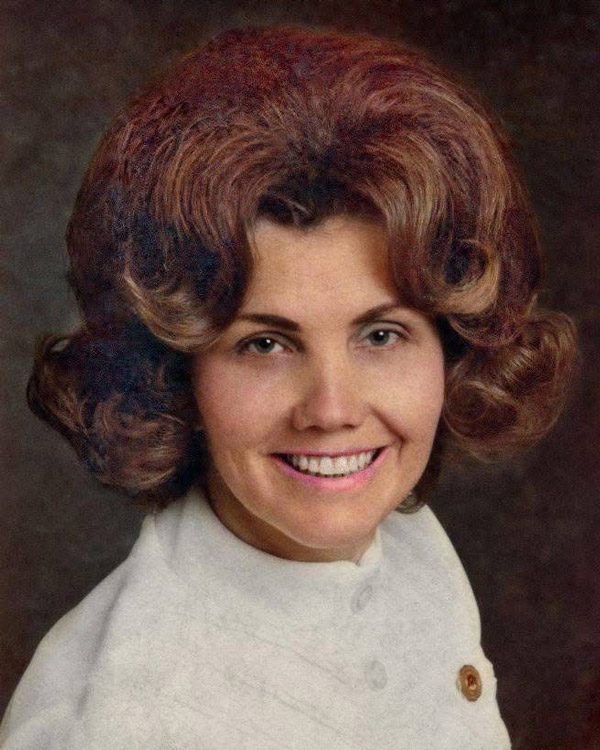
Sylvia Graham, Mary’s grandmother, entered nursing in the late 1960s working as a nurse’s aide in Central Supply and the emergency room at Porter Hospital. Though she briefly considered other career paths, “none offered me the same balance of hands-on care, teamwork, and meaningful connection that nursing does,” she recalled. “Those early influences and experiences solidified my commitment to nursing and continued to motive me in my career.”
Sylvia earned her associate degree in nursing from IU Northwest in 1973, later completing her BSN and Family Nurse Practitioner degrees and becoming the first FNP on staff at Porter Memorial Hospital. Sylvia was also active politically, serving on the Porter County Council for 16 years.
For Mary’s mother, Cheryl Graham, the path was almost inevitable.
“I was inspired to become a nurse by my mother, who graduated from IU’s nursing program and served as a role model for compassion, strength, and dedication to others,” she said.
Cheryl earned her associate degree in nursing from IU Northwest in 1978 and worked more than 25 years in medical-surgical and extended care settings, including long-term Alzheimer’s and dementia care.
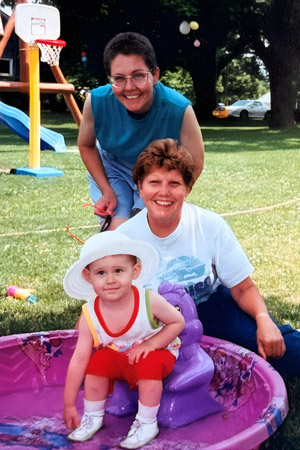
By the time Mary came along, nursing wasn’t just a profession—it was part of everyday conversations.
“Growing up,” Cheryl smiled, “Mary was surrounded by family members and friends who were predominantly in the medical field. She had to listen to us constantly talking about new guidelines, new medical drugs, and new hospital protocols.”
But it wasn’t only her family’s influence that shaped Mary’s path. It was also her own instincts.
“At a young age, Mary showed sincere dedication to helping others. She showered them with loving care,” remembered her grandmother, Sylvia.
Mary enrolled at IU Bloomington, following in the footsteps of her brother who is now a physician. She graduated with her BSN in 2019 and is currently pursuing her nurse practitioner degree.
Paper Charts, Computerized Care
Listening to Cheryl and Sylvia share their experiences makes it clear how much nursing has changed.
Sylvia recalled that before computerized charting, nurses’ notes “were written in black or blue ink for the day shift, green for the 3 to 11 p.m. shift, and red ink for the 11 p.m. to 7 a.m. shift. Also, IV fluids were in glass bottles, 12-hour shifts were non-existent, and very little was thrown away. Suture sets, bed pans, and emesis bags were all autoclaved and reused.”
Cheryl looked back on the 1980s and noted how dramatically the profession has changed since then. From from the restrictive white dresses and caps of her early career to today’s comfortable, colorful scrubs, as well as significant advances in hospital equipment (including more mobile hospital beds), IV insertion safety, and respiratory care.
“Like my mom probably mentioned,” she continued, “there’s a lot less reuse of medical supplies now.” She recalled metal bedpans and urinals that were cleaned and reused, adding that “patients definitely didn’t enjoy them. They were cold. They were uncomfortable. And if one got dropped, the entire unit knew about it!”
The Need for Advocacy
Cheryl and Sylvia agree that many of these changes have improved patient safety and streamlined documentation. But they also feel that progress has come at a cost—making nursing more efficient, but also increasing the demands placed on today’s nurses.
“One of the greatest challenges nurses face is balancing the increasing demands of the healthcare system, such as high patient acuity and staffing shortages, with the desire to provide meaningful, patient-centered care," Cheryl explained. “The emotional toll can be significant, as nurses are often supporting patients and families through some of the most difficult moments of their lives, while managing their own stress and possible burnout.”
Sylvia agreed. “Today’s nurses face even more pressure to manage their time due to changing nurse-patient ratios. Eight-hour shifts are rare and replaced with 12-hour shifts. More technology skills are needed. And AI is also entering our world, and I’m uncertain as to how this may affect nursing.”
“For these reasons,” Mary added, “it is important for nurses to continue to advocate for themselves, their profession, and their patients. Maintaining a sense of unity and professional collaboration is essential in promoting change and improving working conditions across the profession.”
"Give Yourself Some Grace"
With all their years of experience as nurses, do Mary, Cheryl, and Sylvia have any advice for IU’s nursing students?
“I would tell them to be courageous and face the challenges of nursing every day!” said Cheryl. “Commit yourself to the well-being of patients, and while it’s easy to focus on what went wrong, don’t lose sight of what you do well. It will be challenging but imagine the great satisfaction you’ll feel by making a difference in others’ lives.”
“Take full advantage of learning as much as you can in the classroom and at the bedside, so that when you’re a practicing nurse, you’re fully prepared,” added Sylvia. “Your first job will challenge your ability to manage your time. Your IU nursing education will make those beginning challenges so much easier to handle.”
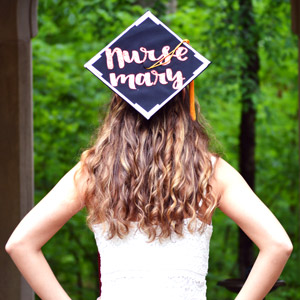
“My biggest advice is to just keep going, even when it feels overwhelming,” said Mary. “Don’t be afraid to ask questions, seriously, ask all of them! No one expects you to know everything, and it’s always better to ask than to guess. Try not to compare yourself to others because everyone learns at a different pace. And give yourself some grace. Nursing is something you truly learn on the job, and confidence comes with time and experience.”
And would all three recommend IU’s nursing program to aspiring nurses?
“Looking back,” said Cheryl, “I remember when Mary obtained her Advanced Cardiovascular Life Support certification prior to graduation. ACLS training is not usually offered in nursing school, and it really stood out to me that the IU program dedicated significant time to thoroughly educate her class on ACLS medications and protocols.”
“We would absolutely recommend the IU School of Nursing to anyone,” she concluded. “We are very proud to be three generations of IU nurses.”