

Many nursing students imagine the impact they hope to make in their careers. For Indiana University School of Nursing doctorate student Heidi Boroff, that vision became reality when she founded Comforting Angels Hospice Care, an organization built on the values of dignity and patient-centered care.
Boroff began her nursing career on a hospital's telemetry and procedural heart floors before leaving to join a hospice care company. Working in hospice care was impactful because of how far they went to provide for their patients, she said. One moment in particular that stood out was when the company arranged transportation for a patient who had traveled to Florida but became ill and wanted to return home to Indiana for Christmas.
“It wowed me,” Boroff said. “It wasn’t ‘Oh look at what we did,’ it was more like they really were caring and fulfilling.”
That moment stayed with Boroff. As the hospice company expanded its client base, however, it became harder to provide the same level of services for their patients. Wanting to continue that deeply personal care, Boroff founded Comforting Angels in New Haven.
Building that vision required personal sacrifice. Boroff worked multiple jobs to support her new company, including serving as a travel nurse in Fort Wayne, teaching at the University of St. Francis, and working as an IV infusion nurse.
Four years later, Boroff's Comforting Angels provides the community with the level of care for hospice patients that she values most. End-of-life care can be a difficult but crucial area of nursing, so providing dignity and comfort to patients at this stage is what Boroff values greatly.
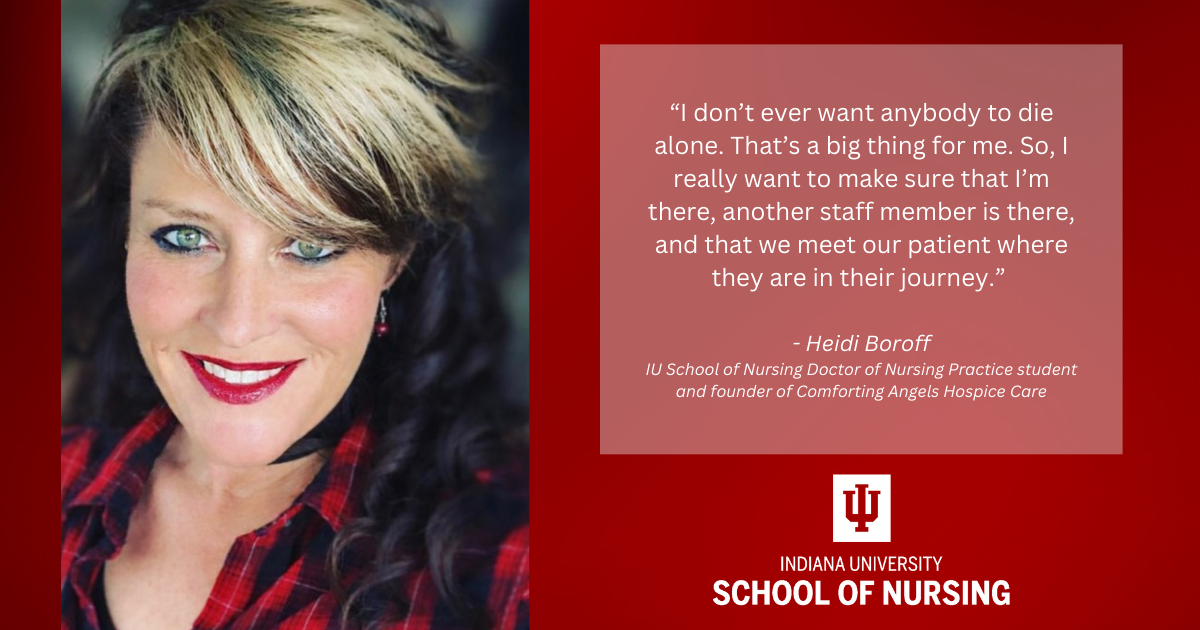
“We’re not curing, we’re making people comfortable and offering dignity,” she said. “I don’t ever want anybody to die alone. That’s a big thing for me. So, I really want to make sure that I’m there, another staff member is there, and that we meet our patient where they are in their journey.”
Part of this extensive care is having a team that can meet both the physical and emotional needs of the patients. Comforting Angels has staff that expands well beyond nurses and certified nursing assistants. The center offers music therapy, social work services, occupational therapy, physical therapy, speech therapy, and spiritual care.
Speech therapists help patients and their families learn safe swallowing techniques, while occupational and physical therapists teach patients how to work with any mobility issues to continue to go about their daily tasks. Spiritual care staff members serve more as companions than religious counselors, Boroff explained.
Care that extends to families
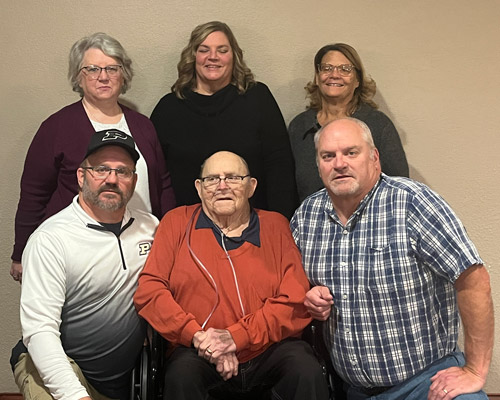
Families take comfort in knowing their loved ones are receiving the care they need. Brian Bradtmueller and his sister Christie Biddlecome shared how Comforting Angels supported their father, Otto, especially by honoring his faith throughout his time in hospice.
“He looked forward to Heidi and her caregiver team coming to see him,” Bradtmueller said. “Those were his best days. He perked up when he knew they were coming.”
Boroff’s attentiveness and compassion helped them manage their own caretaking responsibilities, Bradtmueller added. Biddlecome, who primarily stayed with her father during hospice care, was able to rely on Boroff and her team at any time with concerns.
“If I had any questions, Heidi was always available,” Biddlecome said. “There were times late at night when things weren’t working out with dad medically, and I could text her at 2 o’clock in the morning and get a quick response. It was amazing to see the concern and the care that she showed my dad.”
Growing care through education
Providing that level of care requires constant availability and expanding clinical experience. In addition to providing 24/7 on-call care, Boroff manages the administrative, compliance, and marketing duties for the company. This fall, she began to pursue additional education and added another role—Doctor of Nursing Practice student—after realizing some of the limitations in what Comforting Angels could provide patients, such as ordering medications.
Looking ahead, Boroff believes earning her DNP will allow her to better serve her patients and expand health education efforts in her New Haven community.
“I’ve held educational meetings, and you have to stay within your scope of practice,” she said. “With a DNP, I’ll be able to do more and educate at a higher level. I don’t want to be behind the times. I want to educate people and be a part of something.”